

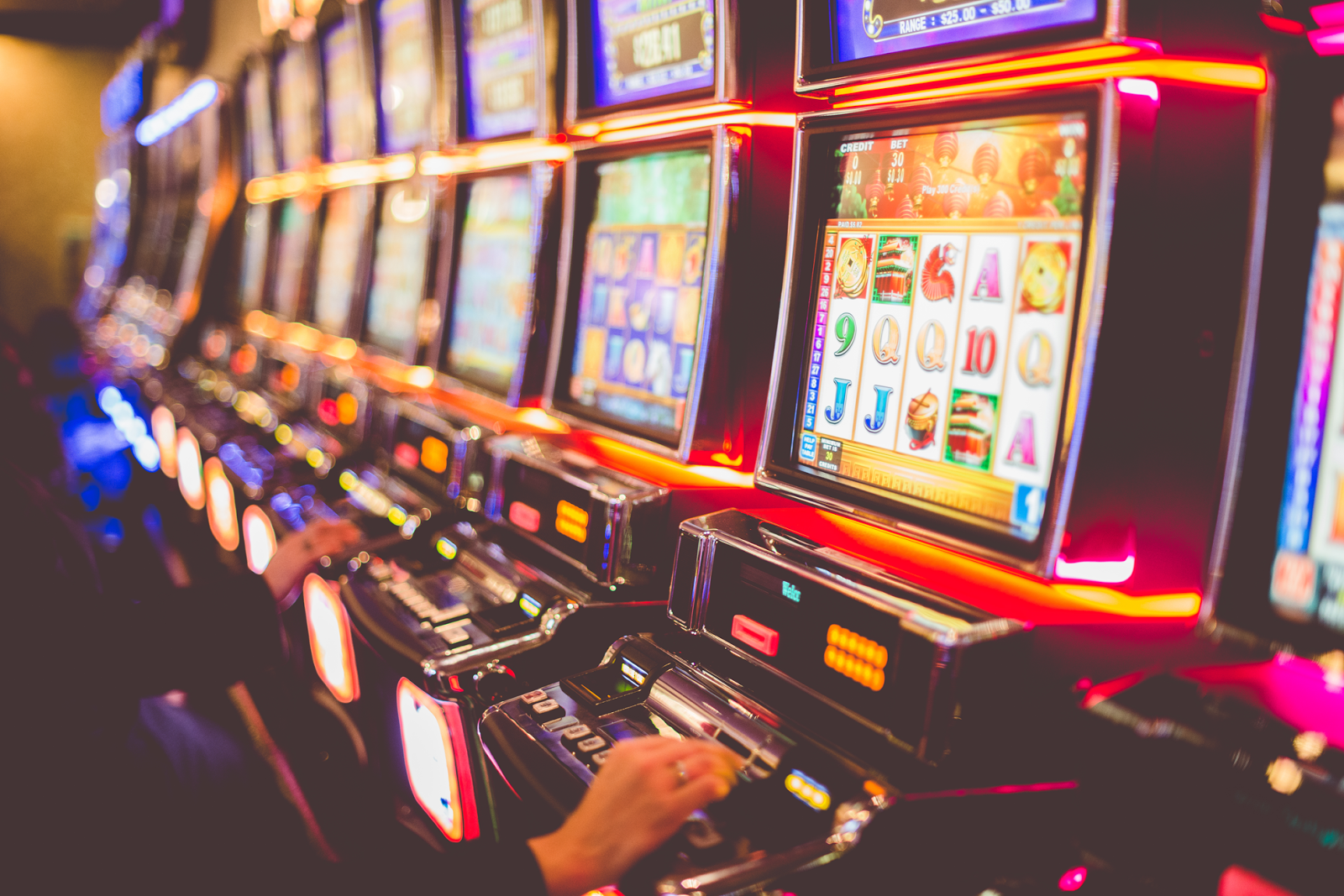
Every spin of a slot reel, any digital card dealt in virtual blackjack, and any roulette ball that settles into a numbered pocket on a computer screen depends on a single invisible mechanism: the random number generator https://greatspins.net/. For players at GreatSpin Casino, understanding how RNG technology works transforms a session from blind hope into informed engagement. The concept is simple in theory but extremely intricate in practice. A properly implemented RNG ensures that each outcome is independent, unpredictable, and statistically fair, mirroring the randomness a player would expect in a physical casino. GreatSpin Casino establishes its entire virtual floor on this principle, offering hundreds of slots, table games, and instant-win titles that have been independently verified to produce genuinely random results. Without a trustworthy RNG, no bonus, no game variety, and no payment speed would matter. This guide unpacks the inner workings of casino RNGs, separates fact from fiction, and shows exactly how GreatSpin Casino incorporates certified randomness into every aspect of its UK-facing platform, from the welcome offer through to cashout.
What Exactly Is a Random Number Generator and How Does It Power Online Casino Games?
An RNG in the context of online gambling is a software algorithm that produces a sequence of numbers or symbols that cannot be reasonably predicted better than by random chance. The primary type used by casinos, including the platform behind GreatSpin Casino, is a pseudo-random number generator (PRNG). Unlike a true random number generator that might sample atmospheric noise or radioactive decay, a PRNG starts with a seed value and runs it through a complex mathematical formula to produce a stream of outputs that meet stringent statistical tests for randomness. The essential fact is that the sequence is deterministic if you know the seed, but the seed itself is derived from unpredictable sources such as system clock ticks, user input timings, or hardware entropy pools, making it virtually impossible to reverse-engineer in real time. When a player presses the spin button on a slot like Starburst or Book of Dead, the PRNG instantly produces a number. That number is then translated to a specific reel position, card, or dice outcome using a lookup table that specifies every possible result. The entire process happens in milliseconds and cycles continuously in the background, even when no one is playing, so the moment of click simply grabs the most recent number in the stream. This architecture assures that no pattern can form and that past results have zero influence on future ones.
For a casino operator like GreatSpin Casino, the reliability of the PRNG is non-negotiable. The games on offer are usually supplied by independent studios such as NetEnt, Microgaming, and Play’n GO, each of which integrates its own verified RNG into the game engine. The casino’s job is to incorporate those games without meddling with the core logic. This separation of duties is a pillar of trust: the game developer builds and tests the RNG, an independent lab reviews it, and the casino offers the final product. When a player launches a game on GreatSpin Casino’s mobile site or desktop browser, they are communicating straight with the developer’s RNG through a safe connection. The casino is not able to modify the outcome of a spin, nor can it after the fact alter a result. This is not a matter of guidelines but of system architecture. The RNG runs server-side in most cases, with the result delivered to the player’s device, which simply displays the corresponding animation. That animation is for amusement only; the outcome was already set the instant the player pressed the button. Comprehending this removes the illusion that pausing the reels manually or adjusting bet size mid-session can influence what the RNG generates.
Generátor náhodných čísel v stolních hrách: Oko , Roulette a Pokerová hra – Co je jinak?
Zatímco výherní automaty aplikují RNG k nastavení umístění symbolů, deskové hry používají stejnou technologii k simulaci fyzických procesů, jako je zamíchání karet nebo otáčení rulety. U blackjacku online RNG nevybírá přímo kartu; vytváří číselný údaj, které koresponduje místu v virtuálním balíčku, který byl přeskládán pomocí Fisher-Yatesova algoritmu. Samotné míchání je řízeno RNG, který určuje o sledu jednotlivých karet před začátkem hry. Po každém rozdání je balík typicky zcela zamíchán, což vede k tomu, že sledování karet je neuskutečnitelné u většiny online blackjackových variant, kromě případů, kdy hra výslovně využívá několik balíčků s indikátorem a herní dům uvádí, že balík není mezi hrami promíchán. V kasinu GreatSpin klasické varianty blackjacku využívají nepřetržité míchání, což je výslovně zmíněno v podmínkách. To zajišťuje, že každá hra je izolovaná a kasinovní marže je neměnná. Funkcí RNG je pouze dodávat náhodná čísla, která diktují sled míchání, a program hry pak rozdává karty z začátku tohoto náhodného balíčku.
U rulety online RNG vytváří hodnotu mezi 0 a 36 (plus 00 u americké rulety) s stejnou pravděpodobností. Grafické zobrazení rulety je grafický prvek, která sedí předem stanovenému výsledku, analogicky k u výherních automatů. Kulička nekončí na základě fyzikální simulace; RNG již vybral výsledek v čase, kdy hráč zahájil točení. To je důležitý rozdíl od rulety s živým dealerem, kde se používá skutečná ruleta a výsledek je určen skutečnými fyzikálními zákony. GreatSpin Casino nabízí obě varianty rulety a RNG se aplikuje výhradně na první jmenovanou. U pokerového automatu RNG promíchá balíček 52 karet (nebo 53 s divokou kartou) a přidělí pět listů. Když hráč vybere, které karty nechat, ostatní karty jsou taženy z začátku zamíchaného balíčku, který byl důkladně přeskládán na startu. Dobírání není další generování RNG; jednoduše odhaluje další karty v pořadí. To způsobuje, že konečný stav videopokeru je kompletně dán úvodním přeskládáním a hráčovy akce působí pouze na to, jaký úsek této předem stanovené posloupnosti je prezentována. Role RNG je jednotná napříč všemi těmito variantami: generuje základní náhodnost a mechaniky zajišťují vše ostatní.
The Function of Independent Testing Laboratories in Certifying Casino RNGs
No online casino can just state its games are fair; it needs to show it through rigorous third-party testing. Independent testing laboratories are the guardians of RNG integrity in the gambling industry. Bodies such as eCOGRA, iTech Labs, Gaming Laboratories International (GLI), and BMM Testlabs specialise in evaluating the randomness, unpredictability, and statistical distribution of game outputs. Their process usually includes taking the game’s RNG source code, running it through a series of tests that generate billions of outcomes, and checking for any divergence from expected probability distributions. They also verify that the game’s advertised return to player (RTP) corresponds to the actual performance over the long run. For a casino like GreatSpin Casino, displaying a certificate from one of these labs is a powerful trust signal. It tells UK players that the games they are playing have been examined by an entity with no financial stake in the casino’s revenue, and that the RNG has passed tests far more demanding than anything a player could conduct on their own.
GreatSpin Casino partners with game developers who hold active certifications from recognised testing houses, and the casino itself operates under a licence issued by the UK Gambling Commission. The UKGC mandates that all virtual game outcomes must be determined by a properly tested RNG, and it requires operators to retain testing reports and make summary certificates available to players. While the specific lab may vary by game provider, the principle remains steady: every slot, every virtual table game, and every instant-win title in the lobby has been subjected to statistical analysis that confirms the outcomes are fair and unpredictable. Players can often find the RNG certificate or a seal at the bottom of the casino page or within the game’s help file. Beyond the initial certification, ongoing monitoring is common. Some labs conduct periodic re-tests or require the operator to submit game logs for comparison against expected behaviour. This continuous oversight means that a game that was fair at launch remains fair months later. For anyone spinning the reels at GreatSpin Casino, the presence of these certifications means the RNG is not a black box but a validated, transparent component of the gaming experience.
The way RNG Algorithms Get Seeded and The Importance of the Seed
The starting value is the basis for the whole pseudo-random sequence. Should an attacker could predict or manipulate the seed, they could forecast every subsequent number the RNG produces. That is why seed generation is regarded as a security-critical operation in any legitimate online casino environment. At the software level, game providers typically gather entropy from multiple high-resolution timers, hardware performance counters, and operating system randomness interfaces like /dev/urandom on Linux servers or CryptGenRandom on Windows. These sources are combined using a mixing function that guarantees even a partial compromise of one source does not expose the final seed. Once seeded, the PRNG runs non-stop, generating numbers at a rate of thousands per second. When a player starts a game round, the system records the most recent output. This means the exact outcome depends on the precise nanosecond the request reaches the server, a variable that is entirely outside the player’s control and impossible to time intentionally. For anyone playing at GreatSpin Casino, this mechanism ensures that neither the casino nor the player can alter the result by timing their actions.
Seed management also is part of game auditing. Testing laboratories like eCOGRA and iTech Labs do not simply check the final output; they scrutinize the entire RNG lifecycle, including how the seed is produced, stored, and refreshed. A common requirement is that the seed must be refreshed periodically or after a certain number of outputs to prevent any statistical bias from growing. In practice, many modern slots reseed continuously, using a combination of the initial seed and ongoing entropy collection. This process is hidden to the player but critical for long-term fairness. GreatSpin Casino’s reliance on games from providers that undergo this level of scrutiny means that the seeding mechanism has been stress-tested across billions of simulated rounds. The seed is never shown to the client side, and all communication between the player’s browser and the game server is encrypted with TLS, preventing man-in-the-middle attacks that might attempt to intercept or influence the RNG state. For the player, the takeaway is clear: the moment of clicking “spin” captures a number from a stream that has been running unpredictably since the server booted, and that number is as good as random.
Common Myths About RNGs That Cost Players Money
The most persistent myth in online gambling is that slot machines operate on cycles and that a machine that has not paid out in a while is “due” to hit. This belief, known as the gambler’s fallacy, has no basis in how RNGs operate. Each spin is an independent trial, and the probability of a jackpot on spin number 10,000 is identical to the probability on spin number one. The RNG does not track history, and the game does not have a memory that stores losses and triggers a payout. Another costly misconception is that casinos can flip a switch to tighten or loosen a game in real time. In regulated markets like the UK, changing a game’s RTP or volatility requires a new certification, updated game files, and often regulatory approval. GreatSpin Casino cannot alter the RNG behaviour of a NetEnt or Microgaming slot on the fly; the game files are hosted on secure servers, and any modification would break the digital signature that the testing lab verified. The operator’s control is limited to choosing which certified games to offer and, in some cases, which RTP configuration to deploy from a set of pre-approved options, but this is a one-time setup, not a real-time adjustment based on player activity.
Players also frequently believe that the time of day or the volume of traffic on a casino site affects the RNG. The idea that slots pay more during off-peak hours to attract players is pure fiction. The RNG does not receive any input about how many people are playing, what the aggregate win rate is, or what the casino’s daily revenue target might be. It simply generates numbers. Similarly, the myth that using the auto-play feature reduces the player’s chances because the casino “knows” the player is not paying attention is unfounded. Auto-play spins call the same RNG function as manual spins, and the outcome is determined in exactly the same way. The only difference is the speed of play, which can increase the rate at which the house edge grinds down a bankroll, but it does not alter the underlying probability. At GreatSpin Casino, the RNG operates identically whether a player taps the spin button or lets the reels run automatically. Dispelling these myths is not just an academic exercise; it directly protects a player’s bankroll by preventing them from chasing patterns that do not exist or making bets based on false assumptions about timing.
In what manner RNGs Establish Slot Wins, Payout Percentages, and Variance
Slot machines are the most obvious application of RNG technology in an online casino, and they also create the most misconceptions. At its core, a video slot uses the RNG to pick a random number for each reel, which is then assigned to a specific symbol position via a virtual reel strip. Modern slots often have hundreds of virtual stops per reel, even if only 20 or 30 symbols are visible. The probability of landing a high-paying symbol is adjusted by assigning it fewer virtual stops, while low-paying symbols occupy many more. The RNG does not know or care about the bet size, the time of day, or the player’s balance; it simply outputs a number, and the game’s math model translates that number into a screen display. The return to player percentage, such as 96.5%, is a long-term statistical expectation embedded in the reel mapping and paytable, not a target the RNG tries to hit in any single session. Over millions of spins, the actual payout will trend toward the theoretical RTP, but short-term variance can be extreme. That variance is what players experience as hot and cold streaks, and it is completely a product of the game’s volatility design, not a malfunction or manipulation of the RNG.
Variance, also referred to as variance, is a different parameter from RTP and is set through the arrangement of wins. A high-volatility slot, such as Dead or Alive 2, produces less but bigger wins, while a low-volatility game like Blood Suckers rewards tinier amounts more frequently. The RNG itself does not decide to render a game volatile; it simply produces random numbers that, when interpreted through the game’s specific reel set and paytable, produce that volatility profile. GreatSpin Casino’s slot library spans the full volatility spectrum, and the RNG operates identically in every title. The variation lies only in the mathematical model placed on top. This is why a player can transition from a high-variance to a stable game and observe a difference in hit frequency without any change in the underlying fairness. It is also why strategies like boosting the bet after a loss do not succeed: the RNG has no memory, and the likelihood of a win on the next spin is precisely the same as it was on the previous one. The only thing that shifts is the player’s bankroll. Understanding this difference between the RNG’s purpose as a number source and the game’s function as an decoder is crucial for anyone who wants to enjoy slots with realistic expectations at GreatSpin Casino.
The Difference Between True Randomness and Pseudo-Randomness in Internet Gambling
True randomness, physically, originates from fundamentally unpredictable real-world phenomena. HRNGs (HRNGs) leverage quantum mechanics or temperature noise to produce bits that are truly non-deterministic. Pseudo-randomness, by contrast, is a mathematical simulation that, with sufficient output, could theoretically be predicted if the algorithm and initial state were known. In online casinos, PRNGs are prevalent because they are rapid, reproducible for auditing, and can be made cryptographically secure. A cryptographically secure pseudo-random number generator (CSPRNG) utilizes algorithms designed so that no feasible computational effort can differentiate its output from genuine randomness or forecast future bits based on past ones. The Mersenne Twister, previously widely used, has largely been replaced by algorithms including Fortuna or AES-based counter mode algorithms, which offer superior security. For a user at GreatSpin Casino, the practical difference between true and pseudo-randomness is minimal. A properly seeded CSPRNG will pass the Diehard and NIST test suites, meaning it behaves indistinguishably from a true random source for all gambling purposes. The practical concern is not the theoretical predictability but whether the implementation is flawed or the initial seed can be compromised.
GreatSpin Casino’s game library comes from studios that use industry-wide CSPRNGs, and the platform itself does not interfere with the generation process. The seed for each game session is typically derived from a combination of server-side entropy and client-side inputs, such as the microsecond timing of a mouse click or a touchscreen tap, which are unable for anyone to replicate. Even if a player could record every millisecond of their own activity, they would lack access to the server-side entropy pool that incorporates network packet arrival times and hardware interrupts. This dual-source seeding is a standard practice among reputable game developers and assures that no two sessions ever start from the same state. The result is that each spin, deal, or dice throw is an independent event. The common belief that a slot machine is “due” for a win after a dry spell is a cognitive bias, not a depiction of RNG behaviour. In a true or pseudo-random system, past outcomes do not alter the probability distribution of future ones. The RNG has no memory, and the concept of a cycle is a myth unless the game explicitly uses a fixed deck or a predetermined bonus feature sequence, which is infrequent and always disclosed.
In what manner GreatSpin Casino Incorporates RNG Fairness Into Its Full Gaming Experience
GreatSpin Casino does not treat RNG fairness as an isolated element; it weaves it into every aspect of the player journey, from registration to withdrawal. The casino’s game lobby is filled with titles from providers with RNGs certified by internationally recognised testing laboratories. Players can browse hundreds of slots, such as progressive jackpots like Mega Moolah, alongside virtual blackjack, roulette, baccarat, and video poker variants, all backed by identical audited randomness. For those who prefer a human touch, the live dealer section streams real croupiers from professional studios, but the RNG-powered virtual tables remain the backbone of the offering for players who seek quick, seamless play. The welcome bonus, often a deposit match paired with free spins, is primarily applicable to RNG-based slots, and the wagering requirements are clearly detailed in the terms. Because the games ensure provable fairness, players can be assured that meeting a 35x or 40x playthrough target is a matter of luck and strategy, not a rigged obstacle. GreatSpin Casino also highlights the RTP of many games directly in the lobby or help files, providing players with the data they need to choose titles that match their risk tolerance.
Transaction handling at GreatSpin Casino is designed to equal the speed and reliability of its RNG systems. UK players can deposit and withdraw using Visa, Mastercard, PayPal, Skrill, Neteller, and bank transfer, with e-wallet cashouts typically processed within 24 hours and card withdrawals taking between three and five business days. The identical encryption protocols that safeguard the RNG seed during transmission also shield financial transactions, with TLS 1.3 and PCI-compliant payment gateways ensuring that sensitive data never travels in the clear. The casino’s licence from the UK Gambling Commission sets strict requirements on the separation of player funds, anti-money laundering checks, and responsible gambling tools, all of which operate independently of the RNG but reinforce the overall honesty of the platform. Mobile players access the same RNG-certified games through a browser-based interface that adjusts seamlessly to iOS and Android devices, with no compromise in randomness or graphical quality. The touchscreen tap acts as the entropy source that assists seed the PRNG, just as a mouse click performs on desktop. By aligning game fairness, payment security, and regulatory compliance, GreatSpin Casino creates an environment where the RNG is not an abstract concept but a practical guarantee that every session is built on a foundation of genuine chance.
Frequently Asked Questions About Casino RNG and Fair Play
Can a casino manipulate the RNG to decrease my chances of winning?
In a correctly licensed environment, the answer is no. Casinos regulated by the UK Gambling Commission, such as GreatSpin Casino, are required to use games whose RNGs have been examined and certified by independent laboratories. The operator cannot access the RNG algorithm to alter outcomes in real time. The game files are digitally signed, and any interference would nullify the certification and prompt regulatory action. The casino’s business model depends on the built-in house edge, not on manipulating individual results. Over millions of spins, the mathematical advantage secures profitability without the need for interference. Players can confirm the presence of testing seals on the casino’s website or within game information pages.
How can I be sure the RNG is truly random and not just a convincing simulation?
What kinds of tests do independent labs use to validate randomness?
Independent testing labs subject RNG outputs to extensive test suites that check for even distribution, autocorrelation, and non-predictability. Common test suites include the NIST Statistical Test Suite, Diehard, and TestU01. These measure properties such as the occurrence rate of ones and zeros, runs of consecutive identical bits, spectral characteristics, and the non-existence of detectable patterns in multi-dimensional distributions. A game must pass all tests across billions of simulated outcomes to receive certification. For a player at GreatSpin Casino, this means the RNG has been examined far beyond what any individual could observe during a lifetime of play. The certificate is not a one-time rubber stamp; many labs require periodic re-testing or ongoing monitoring of live game logs to ensure continued compliance. The combination of cryptographic seeding, continuous background number generation, and independent verification creates a system that is functionally indistinguishable from true randomness for all gambling purposes.
Are live dealer games based on an RNG, or do they work differently?
Live dealer games at GreatSpin Casino do not rely on a software RNG to decide outcomes. Instead, they use tangible gear such as genuine roulette wheels, decks of cards shuffled by hand or by automatic shufflers, and real dice. The results are governed by real-world physics and are transmitted to the player’s device via high-definition video. Optical character recognition technology reads the cards or wheel results and converts them into data that the software interface can display, but the RNG is not included in the core outcome generation. This difference is important for players who prefer the transparency of watching a physical process unfold. Virtual table games, on the other hand, use the certified RNG just as slots do. Both options are available in the GreatSpin Casino lobby, clearly labelled so players can choose the experience that suits their preference.
Can the size of my bet affect the RNG or my chances of winning?
Wager size has no impact on the RNG output or the likelihood of any certain outcome. The RNG generates a random number, and the game’s math model maps that number to a result based on the paytable and reel strips, which are set regardless of stake. A higher bet does not unlock better odds or activate a hidden bonus frequency. The only thing that changes with bet size is the absolute amount won or lost. A player betting £1 per spin on a slot with a 96% RTP will, over the long run, forgo an average of £0.04 per spin, while a player betting £10 will forgo £0.40 per spin. The percentage remains constant. This is a core principle of RNG-driven games, and it extends to every title in the GreatSpin Casino portfolio. Players should pick a bet size that matches with their bankroll and session goals, not one they think will affect the machine’s behaviour.